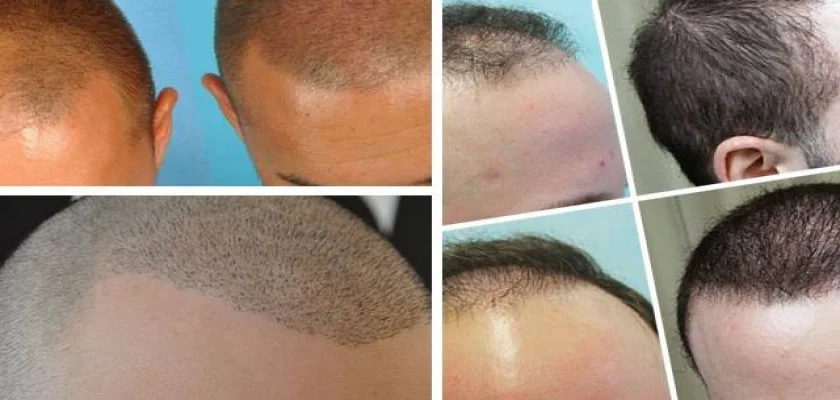
What is the Donor Area in Hair Transplantation?
The hair transplantation procedure generally consists of three main parts. These three main parts consist of; taking the roots from the relevant area, determining and marking the area where the roots will be placed, and subsequently opening the relevant channels, and finally transplanting the taken roots to these areas. These three stages can be evaluated within the scope of
hair transplant in Turkey and are referred to as the “hair transplantation procedure”. For the person to undergo hair transplantation, the hair roots are taken from the person themselves; the most fertile hair region is the occipital region at the back of the head, and this area is also the main center where hair distribution begins during the initial formation stage in the mother's womb. For this reason, the relevant area has been accepted by everyone as the primary area for all hair transplantation operations. Apart from this area, hair roots can be taken from the back or chest area if deemed appropriate.
Two Basic Methods Applied in Hair Transplantation
There are two basic approaches in hair transplantation. The first is a method called FUT (follicular unit transplantation). In this method, the relevant area is removed in a strip, and the number of grafts is determined. The disadvantage of this method is that a strip-like scar can remain in the donor area after the operation. The other method is called FUE (Follicular Unit Extraction). In this method, instead of taking a strip of tissue, small punches with a diameter up to half a millimeter are used to extract follicular units individually. This way, the disadvantage of the FUT method, which leaves a scar, is overcome.