
What is HIV Disease?
What are the Symptoms?
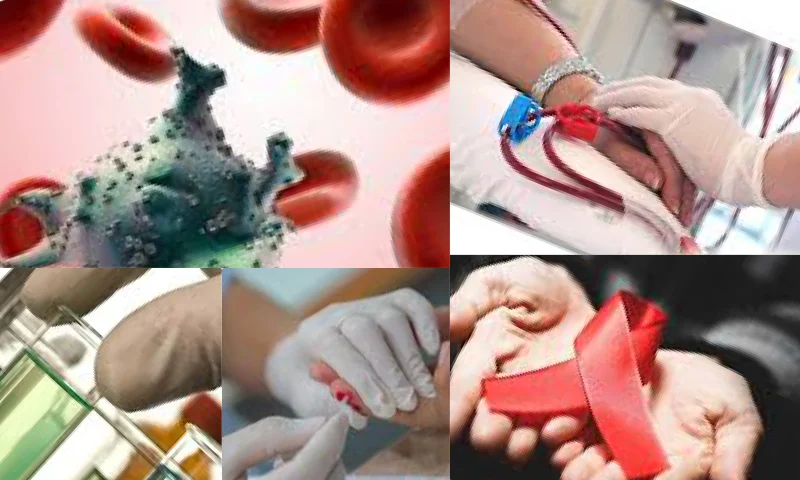
HIV is a virus that causes immunodeficiency in humans. It is more accurate to refer to AIDS, caused by the HIV virus, rather than HIV disease. It is a widespread viral infection globally. According to the World Health Organization, 37 million people worldwide carry this virus. The virus is said to have first passed from animals to humans zoonotically. HIV was first observed in the Democratic Republic of Congo. It quickly spread worldwide as it is a dangerous virus that can be transmitted from person to person. After being isolated in 1983, extensive research has been conducted on it, and it is a life-threatening virus closely monitored by the scientific community. The HIV virus collapses the human immune system, leaving the infected person vulnerable. The HIV virus belongs to the retrovirus family. Retroviruses carry two single-stranded RNA molecules similar to each other. This virus family is special and was detected much later. It was generally known that RNA is produced from DNA, and protein from RNA, and this cycle was called the Central Dogma. However, it was proven that retroviruses produce DNA from RNA via the enzyme reverse transcriptase, thus yıkılmış the dogma. This virus, which first entered our lives in the 1980s, has caused the deaths of over 35 million people since then. A definitive cure has still not been found. Examination under an electron microscope revealed that the virus has a unique structure resembling an ice cream cone. HIV is taxonomically a subspecies of the Lentivirus genus. Generally, there are 5 main groups of Lentiviruses. These are bovine immunodeficiency (BIV), equine immunodeficiency (EIV), feline immunodeficiency (FIV), ovine/caprine arthritis-encephalitis virus (CAEV), and HIV, which includes primates, including humans. A person suspected of having HIV does not necessarily show symptoms immediately. Generally, all signs and symptoms appear within 3-8 weeks. In rare cases, symptoms have appeared 1-5 years later. The ELISA test is performed on individuals suspected of having HIV. In this test, a blood sample is taken from the suspected person to check if they have contracted the infection. The collected blood is analyzed in a laboratory environment, and the interpretation is based on the presence of anti-HIV antibodies. These antibodies are produced by the immune system to fight the virus. If this test comes back positive, it means the person carries the virus, but it needs to be repeated after 3 months.
Prevention and Treatment
HIV, having a fragile structure, cannot survive outside the body. The important thing is to prevent fluid transfer between bodies from an infected person. HIV is transmitted through breast milk, blood, or seminal fluids. According to the Ministry of Health data, the transmission rate through unprotected sexual intercourse is 49.4%. This highlights the importance of using condoms during intercourse. Unfortunately, there is no definitive cure for HIV today. However, through the research of the scientific community, some medications have been developed. These are drugs like AZT (Zidovudine) that inhibit viral replication. While these drugs do not provide a definitive cure, they help the person live a better quality of life. However, they do not eliminate the virus entirely. What is important here is prevention and early diagnosis. Early diagnosis will both increase the quality of life for the infected person and prevent transmission.