
Definition and History of Artificial Intelligence
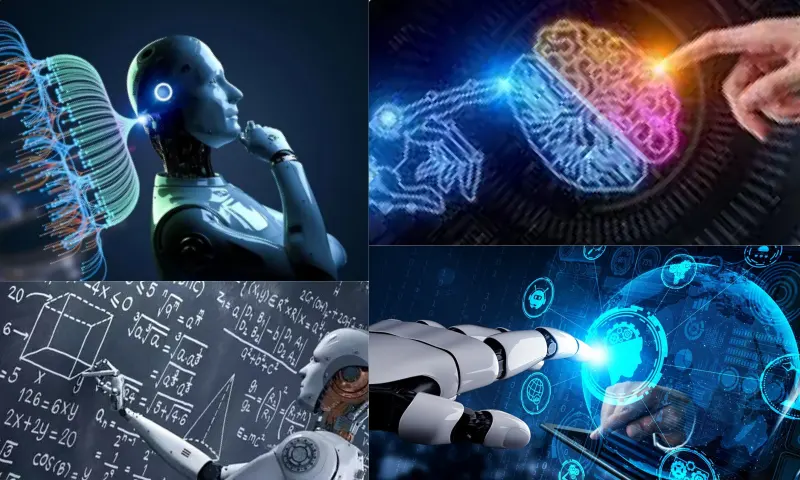
Artificial intelligence (AI) is defined as a technological field that enables computer systems to possess human-like intelligence. AI aims to enable computers to mimic human-specific cognitive abilities such as learning, reasoning, problem-solving, perception, and language understanding. The term artificial intelligence was first used in 1956 at the Dartmouth Conference by John McCarthy. This conference is considered the official beginning of artificial intelligence research, and AI technologies have developed rapidly since then. For information on this subject and to ask your questions, you can look at related online companies on web pages and review them in detail from there.
- Early Studies: The 1950s and 1960s were the years when the first steps of artificial intelligence research were taken. In this period, which began with Alan Turing's question, "Can machines think?", fundamental concepts such as the Turing Test emerged. This test aims to determine whether a machine can exhibit human-level intelligence. Furthermore, the first artificial intelligence programs and simple learning algorithms were developed during this period.
- Winter Periods and Revival: In the 1970s and 1980s, artificial intelligence research experienced a slowdown due to lack of funding and technological limitations. These periods are known as the "AI Winter." However, from the late 1990s onwards, AI research revived with advancements in computer hardware and the availability of large datasets. During this period, sub-disciplines such as machine learning and deep learning made significant progress.
- Modern Era and Applications: Today, artificial intelligence is used in many fields. AI applications can be seen in many sectors, from healthcare to finance, from the automotive industry to education. In particular, deep learning algorithms and neural networks have achieved great success in areas such as image recognition, natural language processing, and autonomous systems. This rapid development of artificial intelligence indicates that it will have even broader application areas in the future.
Applications of Artificial Intelligence in Daily Life
Artificial intelligence is increasingly becoming a part of our daily lives. The advantages provided by this technology are increasing efficiency in various sectors and improving people's quality of life. Here are some important applications of artificial intelligence in daily life:
- Smart Assistants: Smart assistants like Siri, Google Assistant, and Alexa are among the most common uses of artificial intelligence technology. These assistants can understand users' voice commands and respond thanks to their natural language processing capabilities, and perform various tasks. For example, they can provide information about the weather, manage calendar appointments, and play music.
- Personalized Recommendation Systems: Artificial intelligence forms the basis of personalized recommendation systems in e-commerce and media platforms. Platforms like Amazon, Netflix, and Spotify offer personalized recommendations based on users' past behavior and preferences. In this way, users can more easily find products or content they are interested in, and the platforms' user experience improves.
- Healthcare Services: Artificial intelligence is used to improve diagnosis and treatment processes in healthcare services. AI algorithms can assist doctors in areas such as medical imaging analysis, disease diagnosis, and treatment recommendations. Furthermore, electronic health records and big data analysis provide important information for the early detection and prevention of diseases. These technologies contribute to healthcare services being faster, more accurate, and more effective.
The Future of Artificial Intelligence and Ethical Issues
The future of artificial intelligence holds great potential in terms of technological developments and societal impacts. However, this rapid development process also brings with it some ethical and social issues. The future of artificial intelligence and the ethical issues to be considered in this process can be summarized as follows:
- Future Vision: The future of artificial intelligence will be shaped by the development of more intelligent and autonomous systems. The use of AI technologies will become widespread in areas such as autonomous vehicles, smart cities, and industrial automation. These developments can fundamentally change social life and the economy. In particular, the impact of artificial intelligence on the workforce is a major topic of debate. On the one hand, an increase in productivity and the emergence of new job fields are expected, while on the other hand, some sectors may disappear due to automation.
- Ethical and Security Issues: The use of artificial intelligence technologies also brings ethical and security issues. Transparency and fairness in AI decision-making processes are important ethical considerations. Algorithmic biases can lead to discrimination and deepen social inequalities. Furthermore, the security vulnerabilities and risks of misuse of artificial intelligence must also be taken into account. For example, issues such as the use of autonomous weapon systems or fake content generated by artificial intelligence (deepfakes) pose serious security threats.
- Regulation and Oversight: Appropriate regulation and oversight mechanisms are necessary to address the ethical and security issues of artificial intelligence. Governments, international organizations, and the private sector must cooperate to promote the responsible use of artificial intelligence technologies. In this process, the transparency, accountability, and respect for human rights of artificial intelligence systems should be fundamental principles. Furthermore, conducting AI research and applications in accordance with ethical standards is important for ensuring social trust.
Artificial intelligence is a technology with the potential to make revolutionary changes in many areas of our lives. However, the development and widespread use of this technology also bring with it ethical and social issues. The future of artificial intelligence will be shaped by carefully addressing these issues and finding appropriate solutions.