
What is an Electronic Board and How Does It Work?
Uses and Advantages of Electronic Boards
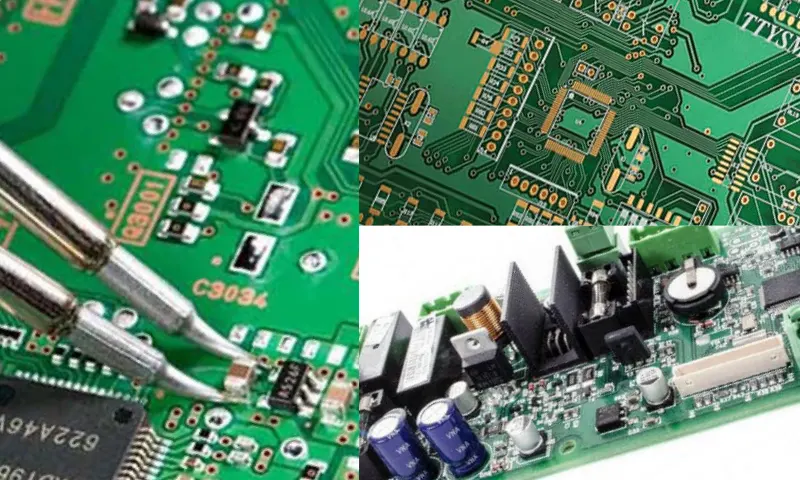
Understanding the answer to the question 'What is an electronic board?' is crucial for comprehending the fundamental building blocks of modern technology. For more information about electronic boards, you can visit https://www.sceelektronik.com/elektronik-kart/. An electronic board is a platform where components such as resistors, capacitors, integrated circuits, diodes, and transistors are placed according to a specific circuit diagram, usually providing conductivity through copper traces. These boards enable the operation of devices by directing electrical signals. They form the internal structure of almost all electronic products, from simple remote controls to industrial control systems.
Electronic Board Manufacturing Process and Quality Control Steps
Understanding the answer to 'What is an electronic board?' is complemented by knowing its areas of use. The phones, computers, televisions, smartwatches, home appliances, and automation systems we use in daily life are built upon electronic boards. In industrial applications, sensor control boards, power boards, and communication boards are frequently used. Their greatest advantage is their ability to fit complex circuits into a small area, offering high performance. Thanks to their modular structure, maintenance and repair processes are simplified. One of the most important aspects of the 'What is an electronic board?' question is its manufacturing process. Production begins with PCB (Printed Circuit Board) design. Once the design is complete, copper traces are etched onto the board, and pads for component placement are prepared. Then, SMD and THT components are placed onto the board on the assembly line. SMD placement, performed by pick & place machines, ensures high speed and precision. Components are fixed to the board through reflow soldering. Wave soldering or manual soldering is applied for THT parts. The most critical stage of production is quality control. Boards are verified to be error-free through AOI, X-ray, and functional tests. Thus, reliable, stable, and long-lasting electronic devices reach the end-user.