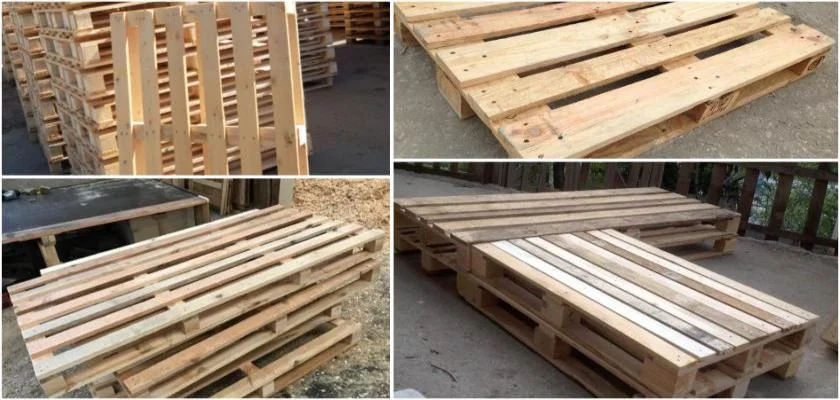
The Importance of Lumber in Wooden Pallet Production
Wooden pallet models, which have an important place in our lives, carry the burdens of our lives and the weights of the world. They ensure that packaged products are easily transported with forklifts and pallet trucks. Pallets and crates have been a part of our lives since antiquity, and wooden crates, used even in cowboy movies in the 1950s to transport weapons, are now at the forefront of the products used in every area of our lives. From nail clippers used in homes to safety pins and refrigerators, everything is transported in packaging and wooden crates. Wooden products are subjected to heat treatment to meet the standards for wooden packaging. In this way, they are made ready for international circulation. The general purpose of heat treatment is to kill and destroy harmful bacteria in the lumber, thus ensuring healthier transportation.
Lumber Density in Production
The symbols that must be on both sides of pallet models are a system that has the authority to apply branding, including the country code and the three-digit number of the firms that will carry out the operations. Methyl bromide, which will be used in these areas, is a very potent poison, and qualified personnel must be present during application. All necessary strict precautions must be taken to prevent the gas from leaking into the environment. There are many companies in our country that produce wooden pallets and designs. The density of lumber is always very important in the production of wooden pallets. Their durability during the construction of the products and whether the nails driven in are easily or difficultly removed demonstrate their strength. In the production of wooden pallets, lumber with a density of generally 640 kg after drying is not used for packaging. Similarly, lumber with a density lower than 350 kg is not sufficiently durable and sturdy for crate production. The moisture content of lumber should generally be between 10% and 20%. This ratio is also very important for the lumber to shrink after drying and for weight savings in transportation. The sawn lumber must not have any minor or serious damage; otherwise, it is not used.